It is 5:30 PM. You have been running around like a maniac since seven in the morning.
You answered forty-two Slack messages, fielded three unexpected phone calls, folded a load of laundry, fixed an urgent client glitch, helped your child with a school project, and paid two utility bills. You are physically and mentally drained.
You sit down at your desk, look at your official morning To-Do List... and notice that your three main scheduled tasks are still unchecked.
A familiar wave of shame washes over you:
- "I got nothing done today."
- "Where did the hours go?"
- "I am so unproductive."
This is the psychological cruelty of the traditional to-do list. It is an unweighted inventory of your obligations that strictly measures what is left undone, completely ignoring everything you actually achieved.
In Chapter 5 of Productivity Micro-Habits: Tiny Changes, Big Impact, author Grace Keys introduces the ultimate antidote to end-of-day guilt: The Done List Boost.
Prefer to watch? Here's the 2-minute version:
The Neuroscience of the "Done List": Dopamine On Demand
Why does an unfinished list feel so toxic, while a finished task feels so exhilarating?
It comes down to human neurochemistry. Every time your brain perceives the completion of a meaningful action, it releases a micro-dose of dopamine—the brain’s master molecule for motivation, focus, and drive.
Harvard Business School researcher Teresa Amabile conducted an exhaustive study of hundreds of knowledge workers and identified what she termed The Progress Principle:
"Of all the events that spark positive emotions, motivation, and positive perceptions during a workday, the single most powerful is making progress in meaningful work."
The problem with a traditional to-do list is that it delays dopamine until the finish line. If a project takes four days to complete, you get zero neurological reinforcement for the first ninety-six hours.
The Done List flips the script: it captures and celebrates micro-accomplishments in real time, fueling your motivation engine throughout the day.
How to Build Your "Look What I Did!" Log
You do not need complex project management software to harness the Done List. Simplicity is what makes it stick.
Grace Keys recommends three dead-simple formats:
1. The Sticky Note Trail
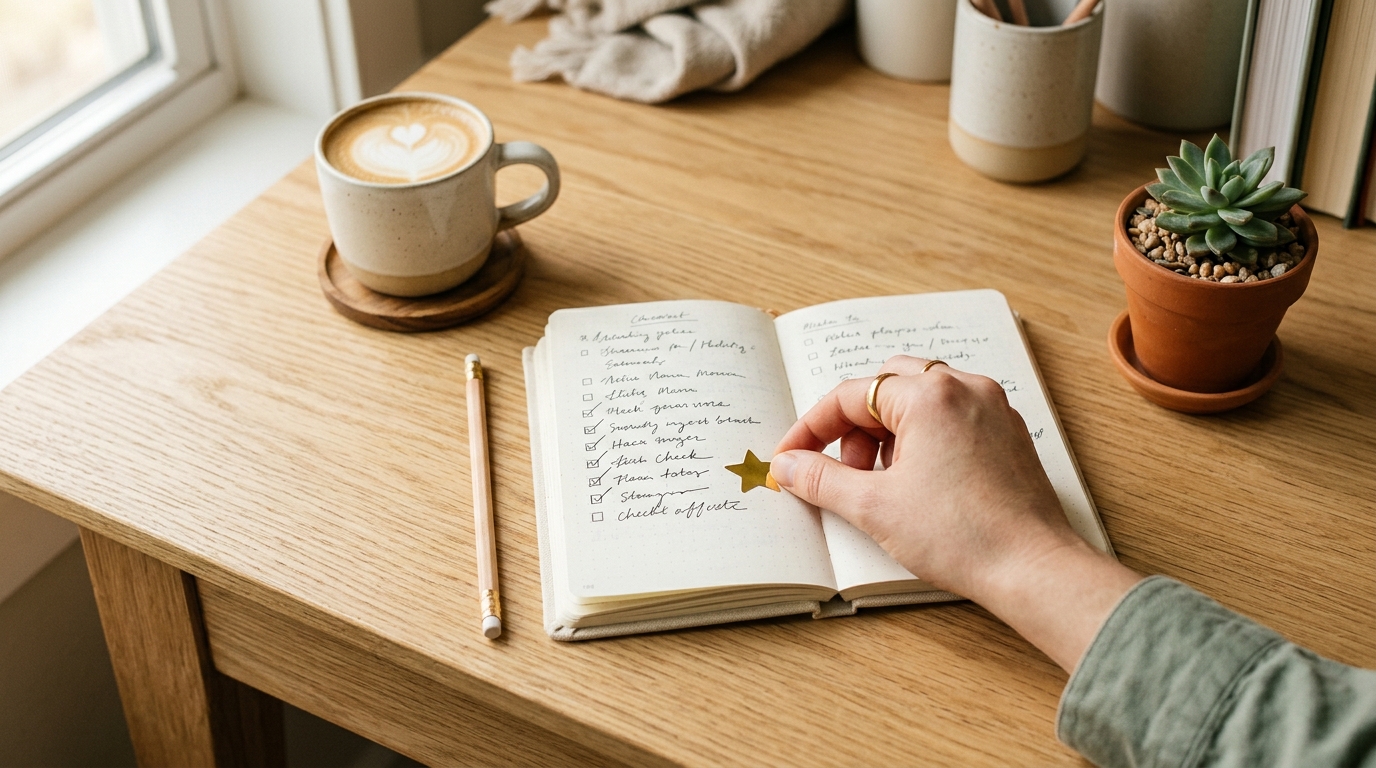
Keep a small pad of pastel sticky notes directly beside your keyboard. Every time you finish an unexpected chore—sent a delayed invoice, cleaned a messy desktop corner, walked the dog—jot it down on a note and stick it in a neat column. By 5 PM, you have a physical, visual trail of evidence proving your output.
2. The Reverse Journal (Digital or Paper)
Open a blank page labeled "Look What I Did!". Divide it into three simple sections:
3. The End-of-Day Bedtime Review
Before climbing into bed, spend sixty seconds listing everything you accomplished—no item too small. Even surviving a chaotic day with high-stress meetings counts. Reviewing your Done List before sleep shuts off the anxiety loop that fuels bedtime insomnia.
Case Study: The Work-From-Home Parent
Grace Keys shares the story of Elena, a remote graphic designer and mother of two toddlers.
Elena was spiraling into daily burnout. She would start every morning with ambitious design goals, but by 3 PM, toddler tantrums, meal prep, and urgent client revisions had derailed her calendar. She went to bed every night feeling like a failure as both a professional and a mother.
Guided by Chapter 5 of Productivity Micro-Habits, Elena stopped relying exclusively on her rigid to-do list and instituted the Done List Protocol:
- Changed diaper during client briefing (Multitasking win)
- Drafted wireframe sketch while kids napped
- Emptied sink and wiped down high chairs
- Sent client emergency asset update
Within ten days, Elena’s perspective radically transformed. She realized she wasn't "unproductive"—she was juggling extraordinary responsibilities with remarkable resilience. That recognition lowered her cognitive stress and actually allowed her to complete design projects faster.
Pair It with the "Next Tiny Step" Habit
What should you do when you stare at a massive, intimidating project on your to-do list (like "Write 20-page annual report" or "Clean entire garage"), and find yourself completely frozen?
Pair your Done List with Grace Keys' signature anti-procrastination tool: The Next Tiny Step.
- Do not try to write the report. Simply open the blank document and type the title.
- Do not try to clean the garage. Simply pick up one empty cardboard box and put it in recycling.
The moment you complete that absurdly tiny action, log it immediately on your Done List. Completing that single microscopic action breaks inertia, releases a hit of dopamine, and makes taking the second step 80% easier.
Key Takeaways
- To-Do Lists Measure Deficits: Traditional lists only highlight what you missed; Done Lists provide empirical proof of your daily effort.
- Harness the Progress Principle: Harvard research proves that acknowledging small daily wins is the single greatest driver of human motivation.
- Capture Unscheduled Wins: Answering surprise client calls, tidying your workspace, or helping family are real achievements—log them.
- Use Visible Evidence: Maintain a physical sticky note trail or simple "Look What I Did!" log to make productivity visually tangible.
- Pair with the Next Tiny Step: When paralyzed by giant goals, take the absolute smallest 30-second action, write it on your Done List, and ride the momentum.
Unlock Effortless Daily Productivity
Ready to master the Done List, habit stacking, and zero-friction daily routines? Get Grace Keys' complete productivity framework in her acclaimed guide:
📖 Featured Book: Productivity Micro-Habits: Tiny Changes, Big Impact by Grace Keys
🌐 Discover the Total Mindset Mastery Series: Total Mindset Mastery Series
💬 What is one uncelebrated win you accomplished today? Brag about it on your Done List in the comments below!
We'd Love to Hear From You
"Which insight or framework in this guide resonated with you most? Share your thoughts below!"
Share your feedback or questions with Grace KeysProductivity Micro-Habits: Tiny Changes, Big Impact
By Grace Keys • URMS Publishing
This practical framework was pulled from Productivity Micro-Habits: Tiny Changes, Big Impact by Grace Keys. Discover proven cognitive tools, actionable worksheets, and transformative habits.
Never Miss an Insight
Join our VIP Reader Team for weekly frameworks and book giveaways.
Subscribe Free