
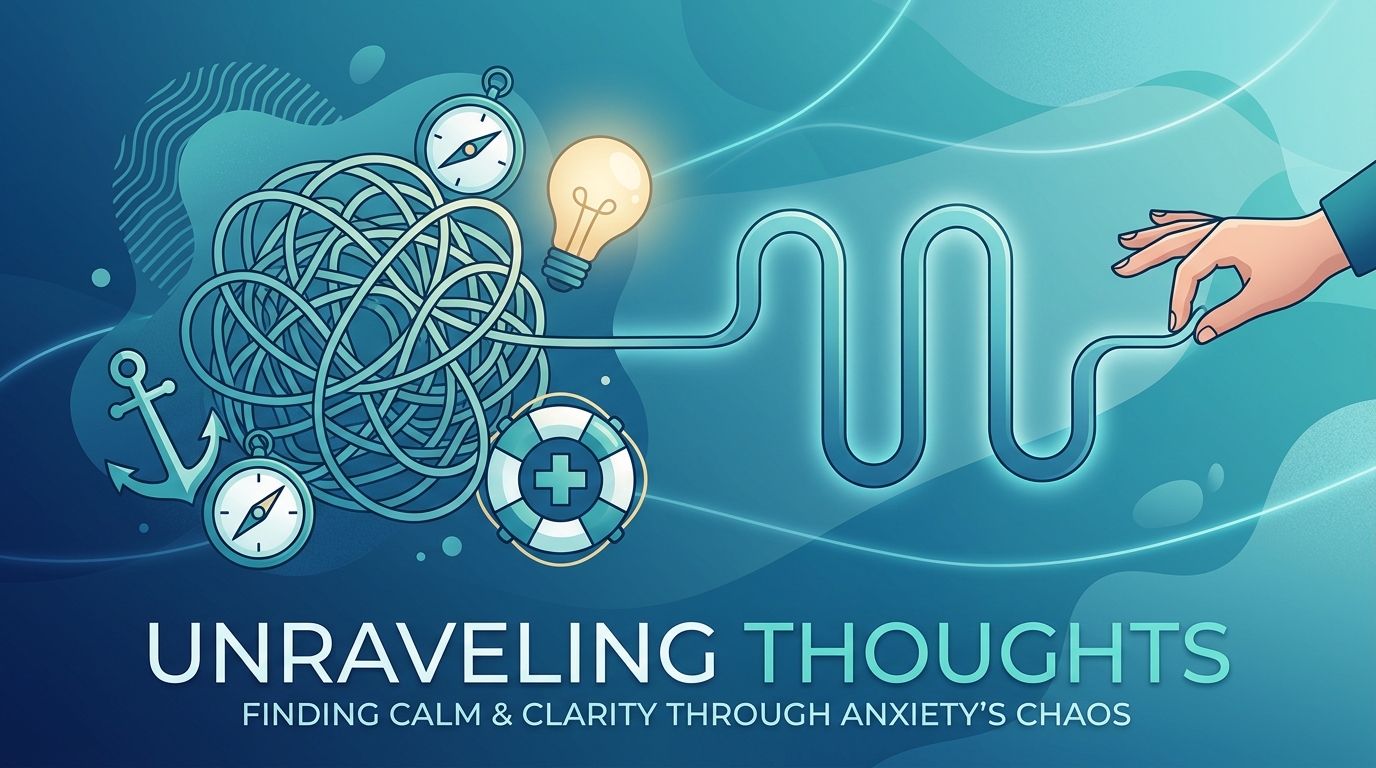
Meet Your Inner Overthinker: Protection Gone Overboard
Have you ever spent 30 minutes over-analyzing a simple email, lying awake at 2 AM replaying a conversation from three years ago, or opening ten menus online just to pick a lunch spot?
You are not broken, weak, or dramatic. Research shows that nearly 73% of adults struggle with chronic overthinking, with young adults in their 20s and 30s experiencing higher levels of cognitive anxiety than any generation before.
In her book Stop Overthinking, Start Doing, author Grace Keys unmasks the true nature of overthinking and offers 3 immediate rescue tools to pull you out of a mental spiral in seconds.
Telling someone to "just relax" or "stop overthinking" is like telling someone to stop having goosebumps when it's cold. Willpower alone cannot shut off an anxious mind. Grace Keys suggests picturing your overthinking mind not as a flaw, but as an overly enthusiastic job applicant—an inner employee who brings color-coded spreadsheets, shows up early, and wants to protect you from embarrassment, mistake, or regret at all costs.
Productive Thinking vs. Wheel-Spinning: Spot the Difference
| Feature | Productive Thinking | Wheel-Spinning (Overthinking) |
|---|---|---|
| Direction | Forward motion toward a decision | Circular loops with zero progress |
| Focus | Solutions and realistic action steps | Worst-case scenarios and "what-ifs" |
| Feeling | Lighter, clear, and settled | Heavy, exhausted, and uncertain |
| Action | Picks an option and moves on | Researches 10 more reviews and freezes |
3 Emergency Rescue Tools for In-The-Moment Spirals
When you catch your brain spinning out of control, deploy these three science-backed rescue tools immediately:
1 Rescue Tool #1: Name & Objectify the Spiral
Instead of fighting the thought, label it with neutral curiosity:
"Ah, there's my inner analyst catastrophizing about tomorrow's presentation."
Why it works: Naming the thought creates psychological distance between you (the observer) and your thoughts (the temporary mental events).
2 Rescue Tool #2: The 5-4-3-2-1 Sensory Grounding Reset
When your mind is racing into a fictional future, force your nervous system back into the physical present moment:
- 👁️ 5 things you can see around you right now.
- 🖐️ 4 things you can physically feel (feet on floor, fabric of shirt).
- 👂 3 things you can hear (clock ticking, fan running).
- 👃 2 things you can smell.
- 👅 1 thing you can taste.
3 Rescue Tool #3: The 2-Minute Brain Dump
Overthinking happens when your working memory is overloaded with unorganized data.
Grab a piece of paper and write down every single thought, fear, and to-do item without editing or worrying about neatness. Once thoughts are on paper, your brain no longer feels the pressure to hold onto them.
Frequently Asked Questions (FAQ)
Is all overthinking bad?
No. Analytical thinking is great for complex problem-solving. It becomes overthinking when it loops repeatedly without leading to a practical decision or action step.
What should I do if I wake up overthinking at 2 AM?
Use the 5-4-3-2-1 Sensory Grounding Reset or get out of bed and perform a quick 2-minute brain dump on paper under low light, then return to bed.
Stop Overthinking, Start Doing
This insight was pulled from Stop Overthinking, Start Doing by Grace Keys. Get the complete system to conquer mental paralysis.
Explore The BooksNever Miss an Insight
Join the VIP Reader Team for weekly frameworks and book giveaways.
Subscribe Free